

sales@zjlinkwin.com

Mobile
+86 15706104016



sales@zjlinkwin.com
Mobile
+86 15706104016

Shovels are among the most fundamental and indispensable hand tools for anyone working with soil, snow, or granular materials. Characterized by a broad blade at one end and a handle (shaft) at the other, shovels are engineered for digging, scooping, lifting, and moving various substances including earth, gravel, snow, coal, mulch, and construction materials. As one of the oldest tools in human history (dating back to Neolithic agricultural developments), shovels have evolved significantly to meet specialized needs across industries. However, not all shovels are created equal—each design is optimized for specific tasks, and using the wrong shovel can drastically reduce efficiency, increase physical strain, and even damage the tool or work surface. In this comprehensive guide, we’ll explore the 11 different types of shovels, their unique design features, material compositions, and precise applications to help you select the perfect tool for every gardening, landscaping, construction, or household task.
Whether you’re a professional landscaper, construction worker, avid gardener, or homeowner maintaining property, selecting the appropriate shovel is critical for maximizing productivity while minimizing physical fatigue and injury risk. Each shovel type is meticulously engineered to perform specific tasks, with variations in blade shape, size, thickness, shaft length, handle design, and material composition directly impacting performance and ergonomics. Using a snow shovel for digging tree holes or a delicate handheld shovel for breaking up rocky soil not only makes the task exponentially harder but also increases the risk of back strain, wrist injury, or tool breakage. Understanding the specialized purpose of each shovel type empowers you to work smarter, not harder, while extending the lifespan of your tools. Let’s dive into the 11 essential types of shovels and their optimal uses across different applications and environments.
Edging shovels are precision landscaping tools specifically designed for creating clean, crisp edges between lawns and garden beds, walkways, or driveways. Distinguished by a small, semi-circular blade with a thick, blunt front edge (opposed to a sharp digging edge), the edging shovel is engineered to be pressed directly into soil or turf rather than dug. The blade typically measures 4-6 inches wide with a depth of 2-3 inches, providing just enough cutting surface to create defined boundaries without excessive soil removal. Its long, straight shaft (36-48 inches) provides excellent leverage for vertical pressure, allowing you to create consistent depth and straight lines with minimal effort. The D-shaped handle (or T-grip) at the top ensures secure hand placement for controlled, precise movements.
Best for: Defining sharp lawn edges, shaping raised garden bed borders, trimming sod along walkways, creating clean separation between grass and mulch/rock beds, and maintaining landscape edging lines. Not recommended for: Deep digging, soil removal, or breaking up compacted earth.
Material considerations: Look for heat-treated steel blades for durability against rock and root encounters, and hardwood or fiberglass shafts for shock absorption and weather resistance.
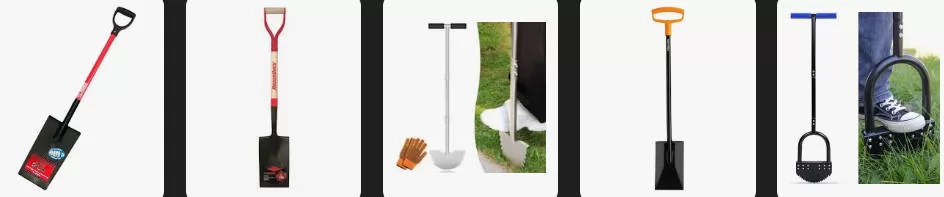
Also known as a drainage spade or ditch shovel, the trench shovel is a specialized digging tool designed for creating narrow, shallow trenches with precision. Featuring an exceptionally long, narrow blade (typically 4-6 inches wide and 10-12 inches long) with a sharp, pointed tip, this shovel excels at cutting straight, uniform trenches with minimal soil disturbance. Unlike standard digging shovels, the trench shovel lacks a footplate (step), as it relies on hand pressure and rocking motions rather than body weight for penetration—perfect for maintaining consistent trench width (typically 4-6 inches). The long shaft (48-60 inches) provides extended reach for digging deeper trenches without excessive bending, reducing back strain during extended use.
Best for: Installing irrigation lines, creating French drain systems, laying electrical/conduit lines, digging narrow drainage trenches, cleaning and refining ditches created by larger machinery, and creating narrow furrows for planting rows of seeds or bulbs. Not recommended for: Moving large volumes of material, digging wide holes, or working in extremely rocky soil.
Material considerations: High-carbon steel blades offer superior cutting performance for roots and compacted soil; fiberglass shafts provide flexibility and reduced weight compared to wood or steel.
A winter essential for regions with significant snowfall, the snow shovel is engineered specifically for efficiently moving large volumes of snow with minimal effort. Characterized by a wide, flat blade (18-30 inches wide) with a high back (6-10 inches) to contain snow, snow shovels feature a blade angle optimized for scooping and lifting rather than digging. Many models include reinforced metal wear strips along the blade edge for durability against concrete, asphalt, or ice, and some incorporate metal grooves or serrated edges for cutting through packed snow or thin ice layers. The shaft (30-48 inches) is typically curved or ergonomically angled to reduce bending and back strain, with D-shaped or ergonomic pistol grips for secure handling with gloved hands. Specialized variations include pusher-style snow shovels (for moving large snow volumes without lifting) and ergonomic snow shovels with curved shafts to maintain proper posture.
Best for: Clearing driveways, walkways, patios, sidewalks, and steps after snowfall; removing packed snow from vehicles; clearing roof edges of accumulated snow. Not recommended for: Digging in soil, moving heavy abrasive materials like gravel, or breaking up thick ice (use an ice chopper instead).
Material considerations: Polyethylene or polycarbonate blades are lightweight and resistant to cold temperatures; aluminum blades offer durability but conduct cold; fiberglass shafts provide strength with reduced weight compared to wood.
Also referred to as a transfer shovel or utility shovel, the flat shovel features a large, flat, slightly concave blade with straight sides and a straight cutting edge—optimized for scooping and moving loose materials rather than digging. The blade typically measures 10-14 inches wide and 12-16 inches long, with a flat profile that allows for easy loading, unloading, and spreading of materials. Unlike digging shovels with curved blades, the flat shovel’s design minimizes soil adhesion, making it ideal for working with wet materials like mud or manure. The shaft (36-48 inches) is usually straight with a D-shaped handle for two-handed operation, providing excellent control for leveling and spreading tasks.
Best for: Transferring loose materials (sand, gravel, mulch, compost, topsoil) between wheelbarrows and garden beds; leveling soil, concrete, or paver bases; spreading mulch or gravel; cleaning up debris; moving manure or animal bedding; skimming water from flooded areas. Not recommended for: Digging in hard, compacted, or rocky soil; creating narrow trenches or holes.
Material considerations: High-impact plastic blades are lightweight for general use; steel blades offer durability for heavy materials like gravel; aluminum blades provide strength with minimal weight for extended use.
The tree planting shovel (also known as a transplanting spade or nursery spade) is a specialized tool designed for precision digging of tree and shrub planting holes with minimal root disturbance. Resembling a narrow trench shovel but with a slightly wider blade (5-7 inches wide) and shorter shaft (available in short 24-inch versions for nursery work or long 48-inch versions for landscape use), this shovel features a sharp, pointed blade with slightly curved sides to create a narrow, deep hole ideal for tree root balls. The blade is typically made from thick, tempered steel to cut through compacted soil and small roots, with a reinforced footplate for applying downward pressure when digging in tough ground. Many models include depth markings on the blade to ensure consistent planting depth for optimal tree establishment.
Best for: Planting tree saplings and shrubs; digging precise holes for container-grown or balled-and-burlapped trees; transplanting established plants with minimal root damage; cleaning debris and small rocks from trenches; creating narrow planting holes for perennials or large bulbs. Not recommended for: Moving large volumes of soil; digging wide holes; working in extremely rocky or root-bound soil (use a root shovel instead).
Material considerations: Forged carbon steel blades provide superior strength for cutting roots; ash or hickory wood shafts offer traditional durability with shock absorption; fiberglass shafts reduce weight for extended use.
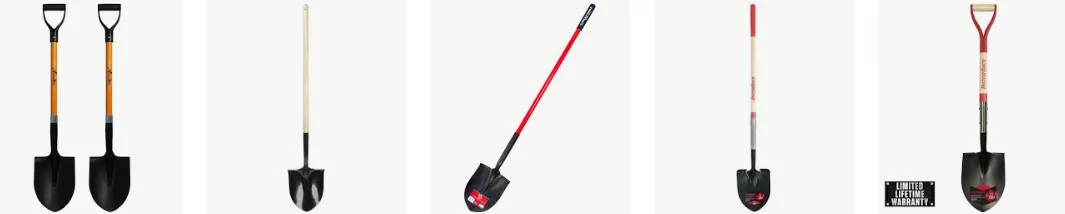
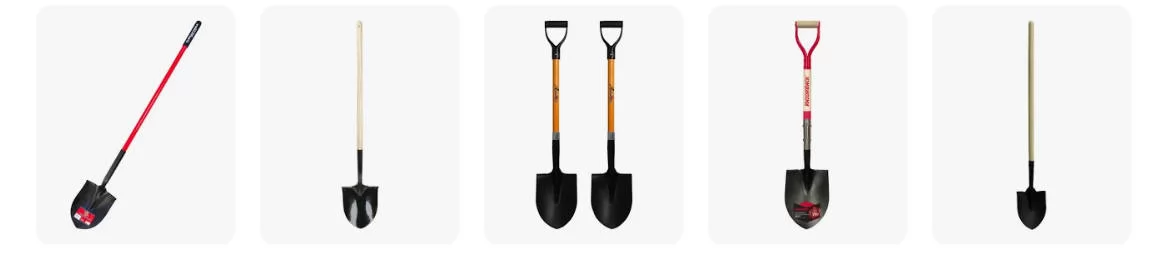
The roundpoint digger shovel (often simply called a digging shovel) is the most versatile general-purpose shovel for garden and landscaping use. Featuring a classic curved blade with a rounded, pointed tip and flared sides (forming a "spoon" shape), this shovel is designed for balanced digging, lifting, and moving of soil. The blade typically measures 8-10 inches wide and 12-14 inches long, with a concave shape that holds soil effectively while allowing for easy release. A reinforced footplate runs along the top edge of the blade for applying downward pressure with your foot, making penetration easier in soft to moderately compacted soils. The shaft (36-48 inches) is straight with a D-shaped handle for secure two-handed operation, providing excellent leverage for digging and lifting.
Best for: Creating garden beds and planting holes; turning over soil in vegetable gardens; digging shallow ditches and post holes (up to 12 inches deep); removing small shrubs; mixing soil amendments and compost; general-purpose digging in loamy or sandy soils. Not recommended for: Heavy clay or rocky soils (use a round point shovel instead); moving large volumes of loose material (use a flat shovel instead); precision edging (use an edging shovel instead).
Material considerations: Tempered steel blades offer durability for general digging; hardwood shafts provide traditional strength; fiberglass shafts reduce weight and resist rot.
Also known as a post-hole digger or auger shovel (manual version), the post-hole shovel is a specialized two-handed tool designed exclusively for digging deep, narrow, uniform holes for fence posts, signposts, mailbox posts, or deck supports. Consisting of two opposing, semi-circular blades (each 6-8 inches in diameter) attached to long handles (48-60 inches) with a pivot point, this tool operates like a giant pair of scissors—gripping and removing soil with each squeeze of the handles. The sharpened blade edges cut through soil and small roots, while the curved design forms a clean, cylindrical hole with minimal effort compared to using a standard shovel. Some models feature serrated edges for cutting through roots or extendable handles for increased leverage and hole depth.
Best for: Digging clean, uniform post holes (6-12 inches in diameter) for fence installation, signposts, mailbox posts, deck footings, and small tree planting; creating holes for concrete footings; removing soil from existing post holes for repairs. Not recommended for: Digging wide holes; moving loose materials; working in extremely rocky soil (use a power auger instead); shallow digging tasks.
Material considerations: Forged steel blades provide strength for cutting roots and compacted soil; heavy-gauge steel handles with rubber grips reduce hand fatigue; reinforced pivot points prevent bending during heavy use.
The root shovel (also called a root cutter shovel or transplanting shovel) is a heavy-duty tool engineered specifically for cutting through tough tree roots, dense root balls, and compacted soil with minimal effort. Featuring a long, narrow, triangular blade (6-8 inches wide at the top tapering to a sharp point) made from thick, hardened steel, this shovel incorporates a reinforced cutting edge designed to slice through roots up to 1 inch in diameter. The blade may be straight (for general root cutting) or curved (for digging around root balls), with a large footplate for applying maximum downward pressure. The shaft (36-48 inches) is typically made from heavy-gauge steel or reinforced wood to withstand the leverage required for cutting roots, with a D-shaped handle for secure two-handed operation.
Best for: Removing old tree roots and stumps; transplanting mature shrubs and trees with intact root balls; digging in root-heavy soil; cutting through invasive root systems (bamboo, ivy); breaking up compacted clay soil with embedded roots. Not recommended for: Moving loose materials; precision digging for small plants; light gardening tasks.
Material considerations: Heat-treated boron steel blades offer maximum cutting performance for roots; solid steel shafts provide strength for heavy leverage; cushioned D-handles reduce hand fatigue during extended use.
Also known as a grain shovel or coal shovel, the scoop shovel is designed for moving large volumes of loose, granular materials efficiently. Featuring an extra-large, deep, U-shaped blade (14-18 inches wide and 16-20 inches long) with slightly blunted edges (to prevent cutting or damaging storage containers), this shovel maximizes material capacity with each load. The blade is typically made from lightweight but durable material to reduce fatigue during repeated lifting, with a high back to prevent material spillage. The shaft (30-36 inches) is shorter than digging shovels to allow for quick, repetitive scooping motions, with a D-shaped handle positioned close to the blade for optimal control and leverage.
Best for: Moving grain, coal, feed, or fertilizer in agricultural or industrial settings; shoveling bulk materials (sand, gravel, salt, sawdust); cleaning up large debris; loading/unloading bulk materials into trucks or containers; spreading bulk materials like salt or sand on roads/walkways. Not recommended for: Digging in soil; cutting through roots or compacted materials; precision tasks requiring controlled material placement.
Material considerations: Aluminum blades are lightweight for high-volume material handling; stainless steel blades resist corrosion (ideal for salt, fertilizer, or chemicals); high-impact plastic blades are economical for general use.
Also known as a hand trowel, garden spade, hand shovel, or belcha, the handheld shovel is a compact, precision gardening tool designed for detailed work in tight spaces. Featuring a small, convex blade (3-5 inches wide and 5-7 inches long) with a pointed or rounded tip attached to a short handle (5-8 inches), this miniature shovel fits comfortably in one hand for precise control. The blade is typically made from polished steel with a sharp edge for cutting through soil, with a comfortable grip (wood, plastic, or rubber) for extended use. Specialized variations include transplanting trowels (narrow blade for seedlings), bulb planters (cylindrical blade for bulb planting), and weeding trowels (with notch for removing weeds with taproots).
Best for: Precision gardening tasks; planting bulbs, seeds, and small seedlings; transplanting starter plants; removing weeds (especially taproot weeds like dandelions); digging small holes for container plants; mixing soil in pots or raised beds; loosening soil around established plants without damaging roots. Not recommended for: Moving large volumes of material; digging in compacted or rocky soil; heavy-duty tasks requiring leverage.
Material considerations: Polished stainless steel blades resist rust and soil adhesion; ergonomic rubber or soft-touch grips reduce hand fatigue; reinforced blade-neck connection prevents bending during use. For premium handheld shovel options, explore our small metal hand shovel collection.
The round point shovel (often called a heavy-duty digger or construction shovel) is the workhorse of shovels—engineered for tackling the most demanding digging tasks in tough conditions. Featuring a thick, heavy-gauge steel blade with a sharp, pointed tip and deeply curved sides, this shovel is designed to penetrate hard, compacted, or rocky soil with minimal effort. The blade (8-10 inches wide) is reinforced with double-riveted construction and a heavy-duty footplate for applying maximum downward pressure, with a sharpened cutting edge for cutting through roots and breaking up clods of soil. The shaft (36-48 inches) is typically made from thick-walled steel or reinforced fiberglass to withstand heavy use, with a D-shaped handle for secure two-handed operation and maximum leverage.
Best for: Digging deep trenches in compacted soil; breaking up hard, rocky, or clay soil; excavating construction sites; digging post holes in tough ground; removing tree stumps (when paired with a pry bar); general heavy-duty digging tasks where standard shovels would bend or break. Not recommended for: Moving loose materials (use a flat or scoop shovel); precision gardening tasks (use a handheld shovel); light digging in soft soil (use a roundpoint digger shovel).
Material considerations: Forged high-carbon steel blades provide maximum strength and durability; solid steel shafts offer rigidity for heavy leverage; cushioned grip handles reduce vibration and hand fatigue. For industrial-grade round point shovels, check our large metal scoop shovel selection for heavy-duty applications.
Selecting the optimal shovel requires matching tool characteristics to your specific task, soil conditions, physical capabilities, and frequency of use. Use this decision framework to choose the right shovel for any job:
Soil Type Considerations:
Task-Specific Selection:
Ergonomic and Physical Considerations:
Additionally, pay close attention to shovel construction quality and materials:
Proper maintenance extends the lifespan of your shovels and ensures optimal performance throughout their use:
For high-quality shovels tailored to professional and homeowner needs, consider reputable manufacturers and suppliers:
Complement your shovel collection with essential gardening tools from our premium gardening tool sets, including pruning shears, garden rakes, and root extractors for complete landscaping capabilities. For protective gear during shovel use, our garden gloves provide hand protection while maintaining dexterity, and our tool bags keep your shovels and accessories organized and portable.
As one of humanity's most essential tools, shovels have evolved into 11 distinct types, each engineered for specific tasks and conditions—from precision edging of lawns to heavy-duty excavation in rocky soil. The 11 different types of shovels (edging, trench, snow, flat, tree planting, roundpoint digger, post-hole, root, scoop, handheld, and round point) each serve a unique purpose in gardening, landscaping, construction, and household maintenance. By understanding their specialized designs, material compositions, and optimal applications, you can select the perfect shovel for every task—maximizing efficiency, reducing physical strain, and achieving professional-quality results with minimal effort.
Whether you're clearing snow from your driveway with a specialized snow shovel, planting a new tree with a tree planting shovel, breaking up rocky soil with a round point shovel, or performing precision gardening with a handheld trowel, the right shovel transforms challenging tasks into manageable ones. Investing in quality shovels matched to your specific needs, maintaining them properly, and using them according to their designed purpose ensures years of reliable service and makes your work with soil, snow, and materials significantly easier and more productive.
For personalized recommendations on selecting the ideal shovel for your specific needs or to explore our complete range of shovels and gardening tools, visit our contact page to speak with our tool experts, or browse our gardening blog for additional tips on tool selection, maintenance, and landscaping techniques.






We use cookies to make the website work, to provide advanced features, social media and traffic analysis, and we use analytics and third-party advertising cookies. If you choose to click "Deny All", you will retain the default setting of not allowing the use of cookies or other tracking tools other than technical tools.




.png)

.png)



.png)